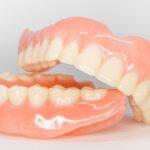

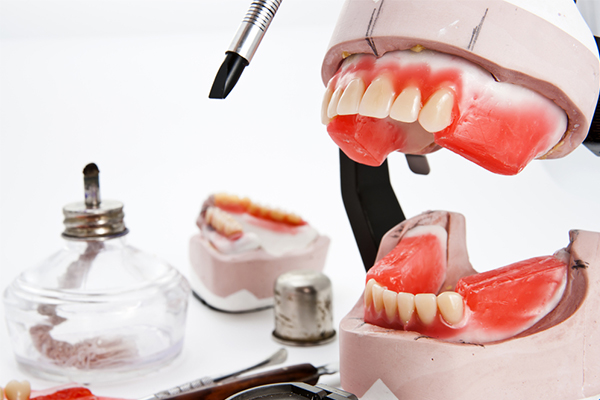
In our practice, you can also come to us for the measurement and manufacture of prosthetic devices. This can be a complete or partial denture, or a denture on implants. From the first visit to the placement of the denture, the dental prosthetist works independently on the denture. In doing so, he takes your personal wishes into account. You can visit the prosthetist without a referral from a dentist or general practitioner.
What can you see the dental prosthetist for?
- Advice/information
- Assessment of the current denture and oral cavity
- Repair and adjustment of the denture
- Renewal or a new denture, partial denture or implant-supported denture
- Aftercare
How the dental prosthetist works
The dental prosthetist normally works together with a dental technician. The technician is allowed to work on dentures on behalf of the dental prosthetist. From the first appointment to the placement of the denture, the dental prosthetist works on your new denture himself or together with the dental technician.
A denture deserves the care of a dental prosthetist!
Many Dutch people have poorly fitting or outdated dentures. This is often associated with pain and discomfort. If this is the case, the dental prosthetist often offers the solution. With the latest techniques and materials, we ensure that your dentures fit like a glove again quickly.
Do I need a new denture?
Because our jaws become smaller over time, both the upper and lower dentures can become loose in the long run. This is often accompanied by complaints such as pain in the mouth, difficulty chewing, speech problems and even problems with digestion. The dental prosthetist offers help. If a denture is only a few years old, it can often be adjusted. A ‘lining’ is then applied to the inside of the denture, so that it fits well on the gums again and is no longer loose. It is also possible that the teeth have worn down and/or touch each other incorrectly. In that case, a complete replacement is the best option.
Een nieuw kunstgebit?

The process for placing a new denture takes an average of about six appointments with the dental prosthetist. The costs are usually declared directly to the health insurer. Ask about the details.
Step 1: Intake, advising treatment plan
During the first appointment, the dental prosthetist examines your mouth to collect all the information needed to make the denture. After this phase, the various options are discussed and a final choice can be made. The appointments are then scheduled.
Step 2: First impressions
Since you want to be able to smile broadly again as soon as possible, the first impressions with stock trays are usually made during the first appointment. Based on this, a plaster model is made in the dental laboratory, which serves as the basis for precisely fitting individual trays.
Step 3: Detailed impression on individual tray
During this appointment, impressions are made again of your jaws – only this time with individual trays with which more details are captured.
Step 4: Bite registration
When the shape of the gums, muscles and any remaining teeth have been recorded, a bite plate (with wax) is used to determine how the upper and lower jaw are positioned in relation to each other. In this phase, the color of the teeth on the denture is also chosen.
Step 5: Fitting of the denture
During this appointment, you will see and fit your teeth for the first time. In some cases, some minor adjustments still need to be made. This is still possible now. Only when everything is to your liking, the denture is finished to the smallest details.
Step 6: Placement of the denture
Finally, the time has come. The moment when the denture really becomes yours has arrived. The prosthetist places the denture and assesses whether it fits nicely. If this is the case, you can go home. This also marks the start of the getting used to period. In the beginning, you may suffer from pressure points. You can always call us to have these removed. You may also experience discomfort with eating and speaking. This is usually short-lived.
Step 7: After-care check-up
This after-care check-up is important for everyone, but especially for people with implant-supported dentures. Implants usually last a long time. For their preservation, good hygiene for your mouth and dentures is very important.
Gedeeltelijke prothese
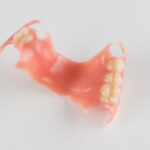
A partial denture is a replacement for one or more teeth. This denture can be made of pink plastic (plastic plate denture) or of steel and pink plastic (frame denture).
Noodprothese

After the extraction of teeth, a recovery period follows. Because you do not want to walk around without teeth during this period, we make an immediate denture – also called a ‘temporary denture’. This is placed immediately after the teeth are extracted. This way you can continue to eat and talk. When the wounds have healed, the denture must be filled. This is called ‘rebasing’. The immediate denture is replaced by a complete denture after approximately six months.
Reparatie kunstgebit
It is possible that your denture will break down over time. If there is a tear or break in the denture, you can have it repaired by us. Do not repair your denture yourself. This can cause you to damage it. Depending on the severity of the damage, you will then lose the denture for a certain period.
Opvullen kunstgebit
Because the denture constantly presses on the jaw, the jaw shrinks. This creates space between the jaw and the denture. If your denture no longer fits well but is otherwise in good condition, you can have the denture relined. You must take into account that you will lose the denture for a day. Perhaps you still have an old denture so you are not without.
Klikgebit
In some patients, the jaw has shrunk so much that the denture no longer has a hold on the jaw. In this case, you can opt for a click-in denture. This is attached to two or four implants that are placed in the jaw. The system used for this differs per person.
Implants in the lower jaw are in most cases largely reimbursed by your health insurer. Whether implants in the upper jaw are reimbursed depends on the situation. For a correct assessment, you will be referred to an implantologist who can determine this on the basis of a photo and medical history.